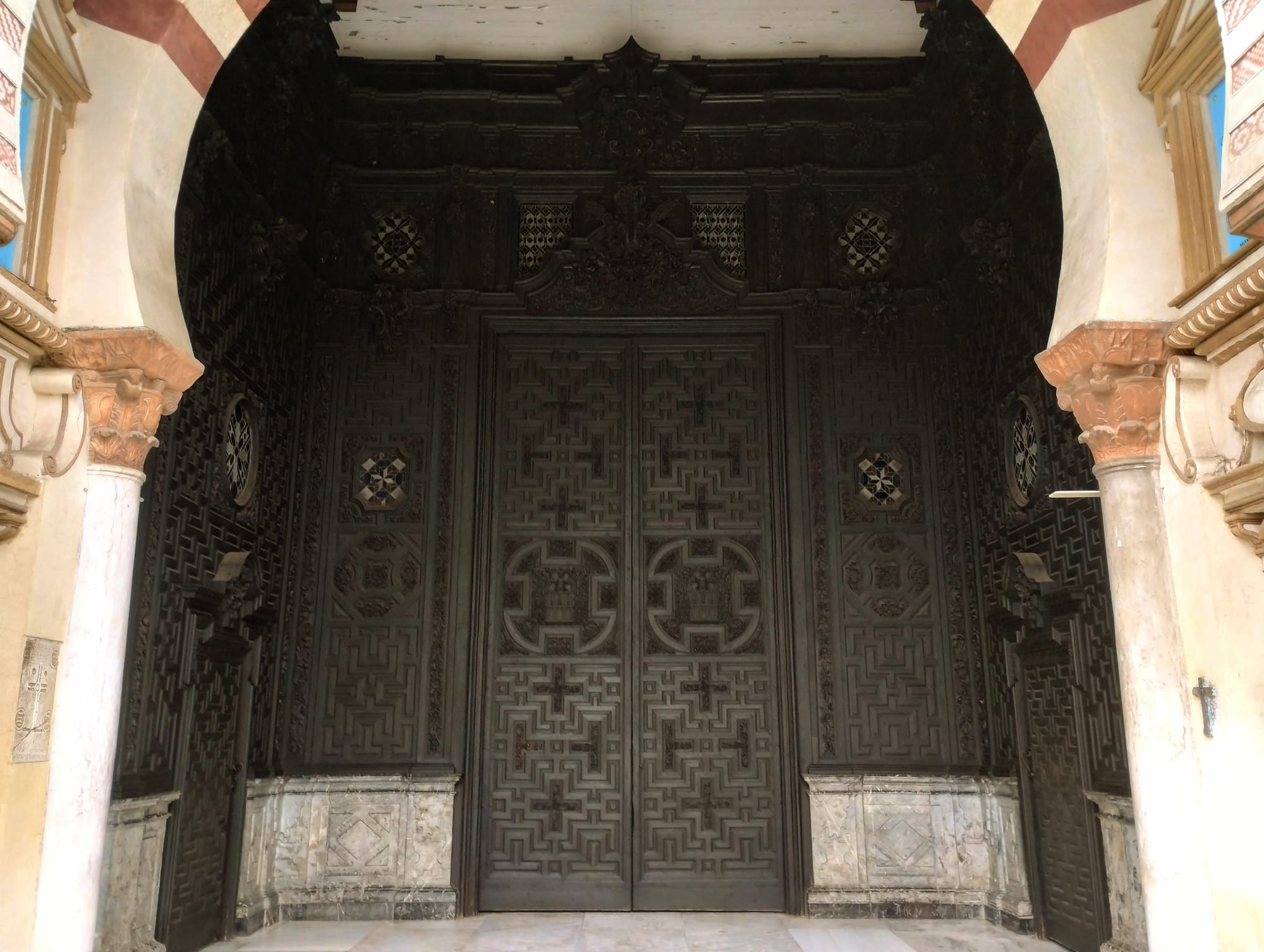
Córdoba, day four: Mezquita-Catedral
Bonus smells and bells, and the world's worst boy band.
I learned, in one of my exploratory trips to the Mezquita-Catedral, that the first entry of the day – from 8.30am – is free. And so, once the 8.10am wake-up call was out of the way, I made my way along with a couple of dozen other people who had had the same idea to the large doors outside the complex where I waited eagerly, trying not to cough.
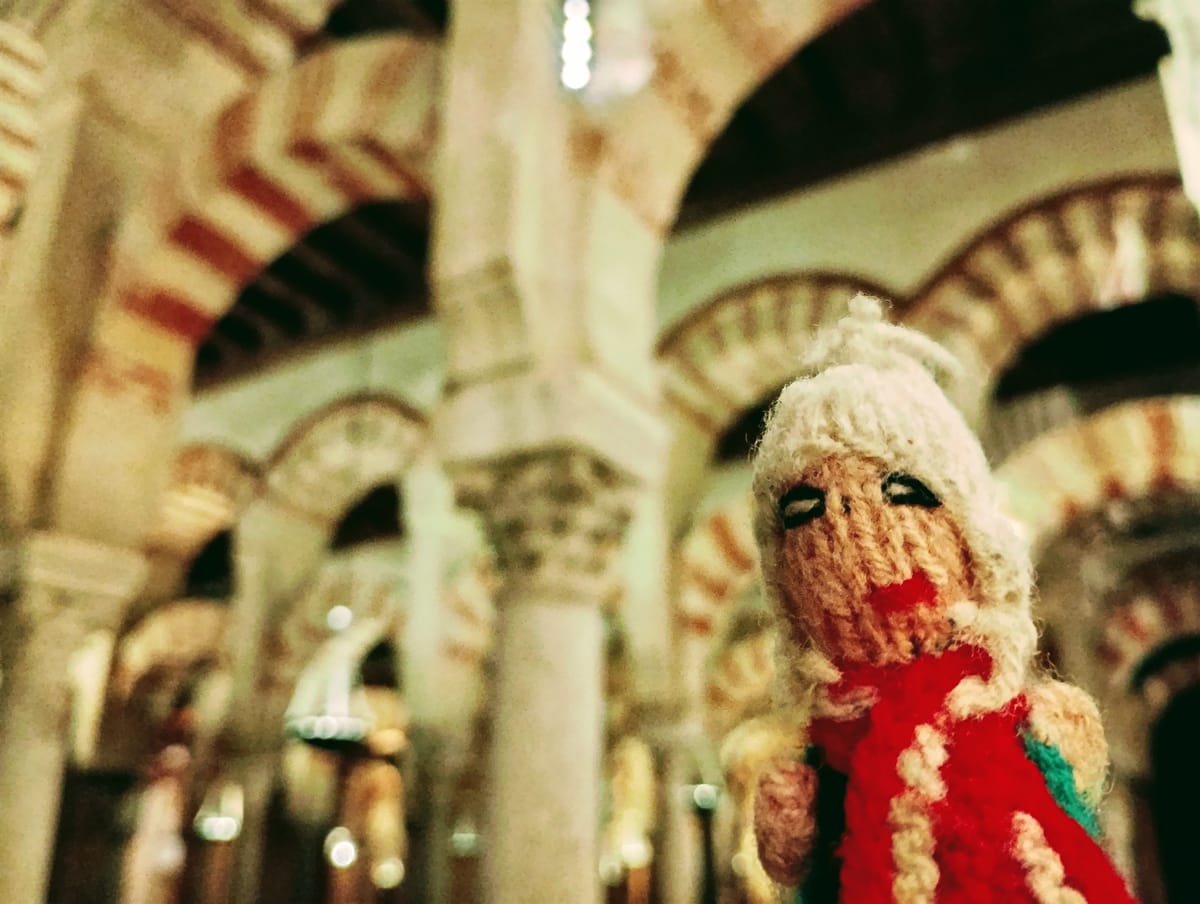
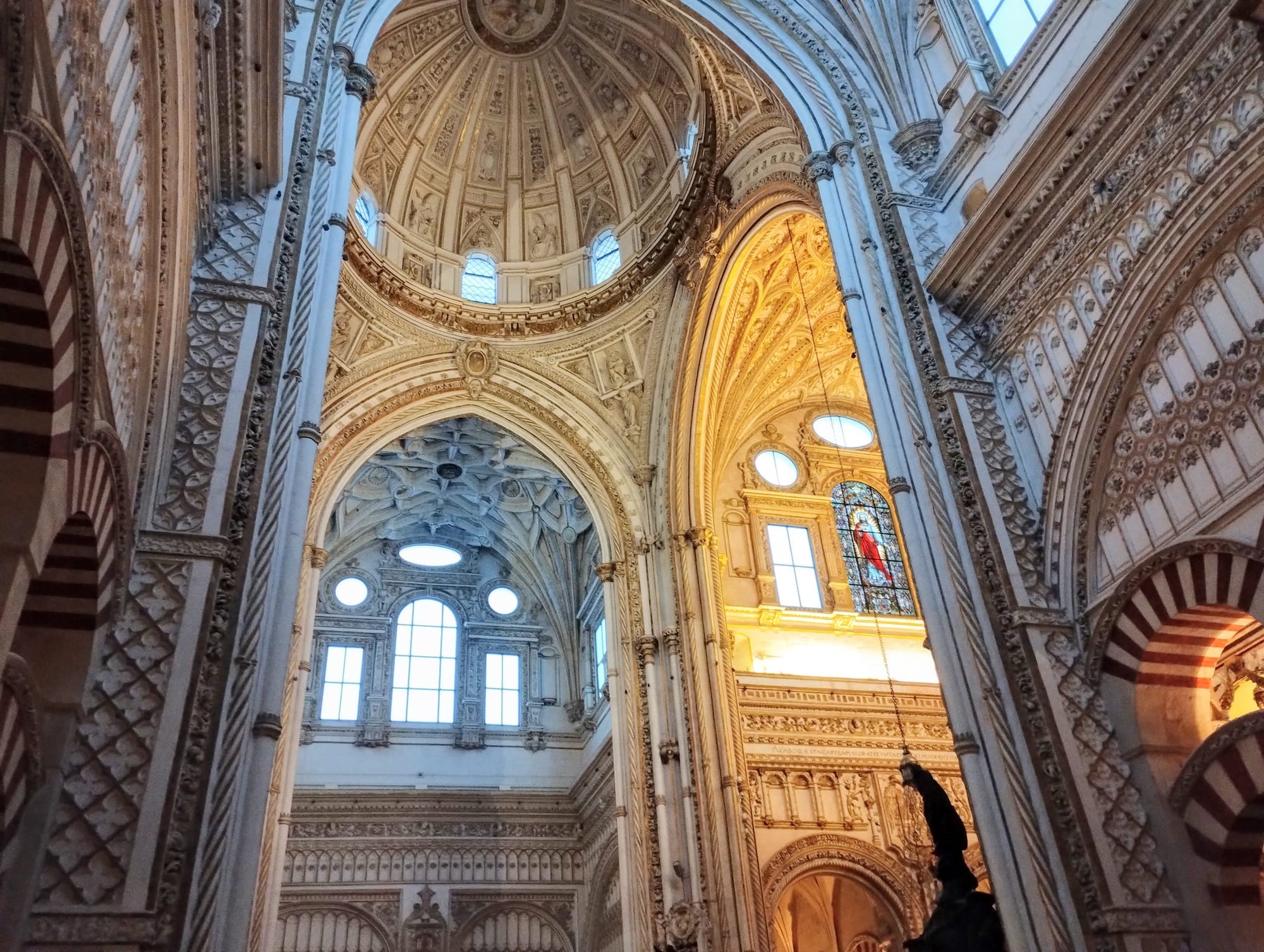
On the dot of half-past, we were told we were waiting at the wrong door, and shunted elsewhere to enter the complex through the Patio de los Naranjos (The Courtyard of the Oranges) – the part of the site that can be visited by anyone for free. From there, we were ushered into the original mosque of Abd Al-Rahman I through the main entrance in the south-east corner. There we were greeted by members of staff who zoomed around on ride-on vacuum sweepers with flashing orange lights, deftly swerving in and out of the candy-cane pillars of the hypostyle hall.
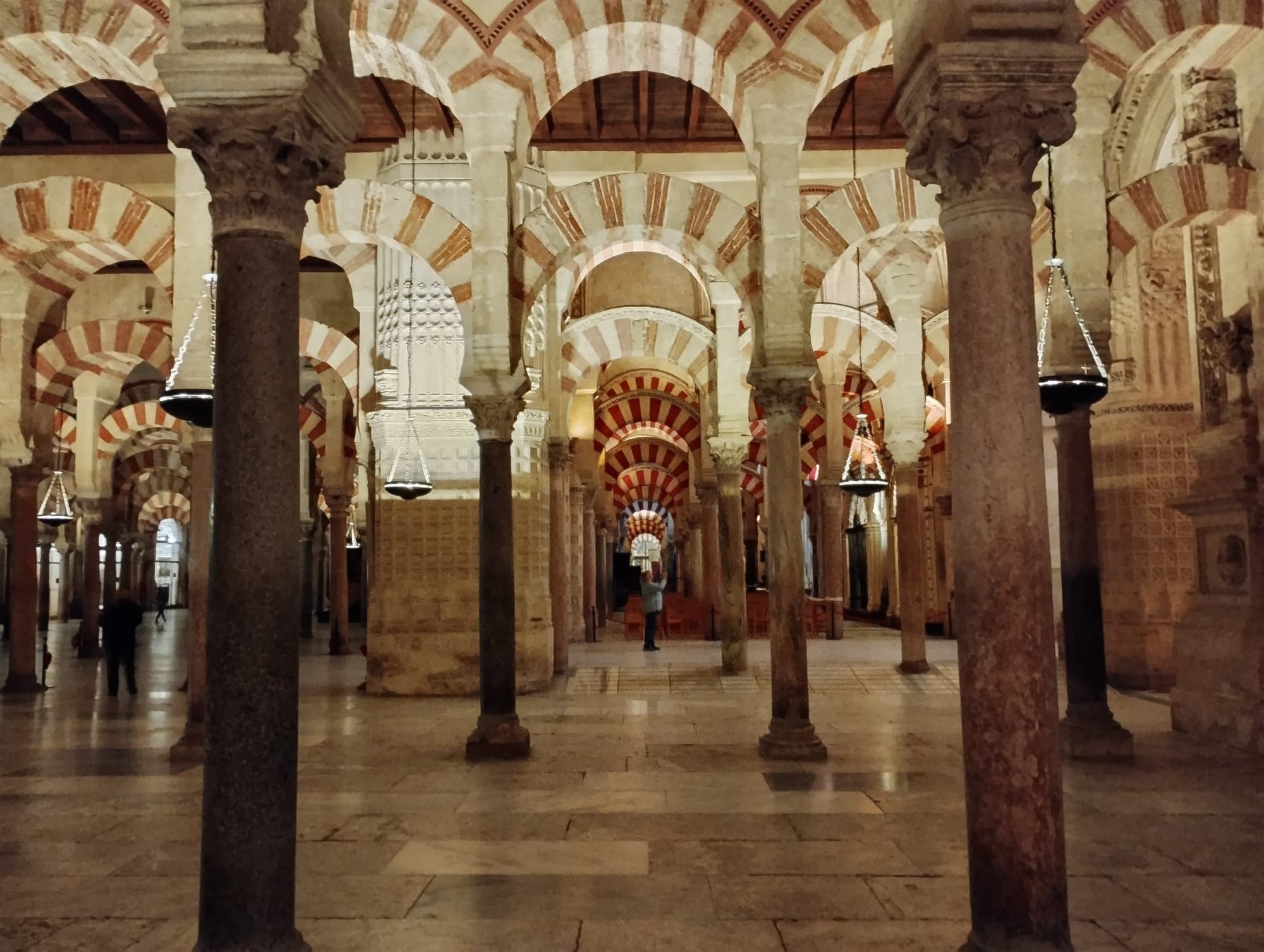
While there is some debate about Christian or Roman origins of the site prior to the mosque being built, construction of its first phase started in 785 AD and was finished around a year later, time having been saved by the repurposing of existing materials in the area, especially columns and capitals. The mosque was then variously expanded and tinkered with until the end of the 12th century.
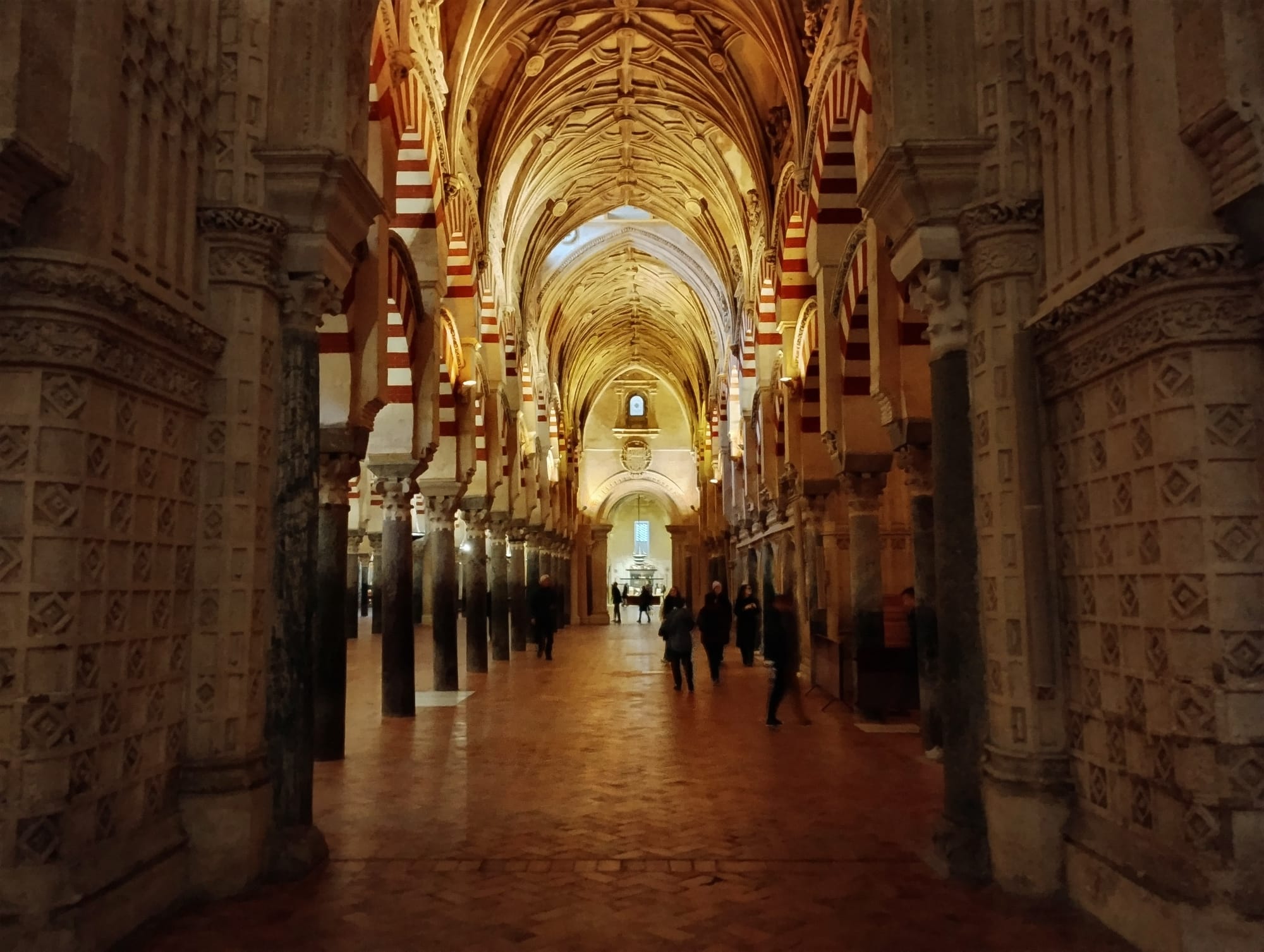
In the 13th century, after Córdoba fell to King Ferdinand III of Castile as part of the Reconquista, the mosque was converted to a Catholic cathedral dedicated to the Virgin Mary. For centuries, it remained relatively untouched until the 16th century, when some bright spark decided what it really needed was a massive gothic cathedral plonked right in the middle, because why not?
Columns and arches in the centre were demolished to make way for a vast sweeping Renaissance nave and transept, which Charles V of Castile and Aragon criticised as "destruction of something that was unique in the world." Yet despite all the controversy, the result is just as astonishing as the building that surrounds it.
Early-morning visitors have 50 minutes to complete their visit, so I spent a lot of it wishing I'd spent more time researching and wondering what I was supposed to be admiring – as if admiring everything weren't actually an option. However, seasoned traveller and charlatan that I am – of course – I spent my time lingering behind other people who seemed to have a plan, unlike me, in my deeply uncaffeinated and still poorly – I am now convinced I have consumption and that the Pharmagrip was faulty – state.
As something of a bonus, while I was snooping about trying to see if it was possible to get access to other parts of the building, an organist started having a bit of a go on one of the two organs in the choir, and so I put my best I-was-a-choirboy-once face on and asked someone official-looking if there were morning or evening services one could attend. Luck was on my side: Eucharist is celebrated every morning at 9.30am, and I was soon ushered into the choir, right in front of the episcopal throne, wondering what, exactly, I was going to do.
Impromptu 1662 Communion in English? No problem. Roman Mass in Spanish? No chance. In vain I scanned the QR code on the back of the pew in front of me – hoping it would help me follow the "songs" (so said the announcement) – which installed an Episcopal app in Spanish onto my phone, which obviously I and a lot of the others around me had no idea how to operate.
None of this confusion seemed to deter two teams – five in purple and five in green, aided by two in white – the principal contestants in this bout of Morning Prayer, from starting without us. They launched into a most challenging singing competition, each attempting to out-do the other in their ability not to hold one note during the turgid prayers and responses, despite the organist's valiant efforts at playing the same note repeatedly hoping, perhaps, for some approximation of tunefulness from at least one of the competitors.
While they thought we weren't watching, the green-robed contingent had a tendency to hang around in the background for a bit of a chat – perhaps keeping score. The cantors-in-white then set to trying to out-do each other in artistic displays of censer waving and incense-cloud making, until someone – during preparation of the sacrament – accidentally smacked the microphone on the altar with a censer, which made an almighty bang that roused one of the older ones in purple on the benches from what one might politely describe as "deep matinal contemplation".
If I'd had access to hymn board numbers, I'd have held up a nine.
One of the ones in purple had to admonish one of the cantors in white for singing too loudly during a bit which obviously wasn't his to sing through – sing doing some seriously heavy lifting there – and then came time for the sacrament, in which the best part – wine – was consumed only by the gaily-coloured ones, and not distributed to the peasants, who only got a bit of wafer. Variously throughout the spectacle, birettas were doffed and donned in a most inefficient demonstration of head-wear management.
Towards the end, another purple one turned up from somewhere for no real purpose other than having a chat, but then it was time for the organist to unleash his ire from the four-manual console behind me, and the whole place shook.
In the end, nobody knew which team had won.
I lingered a little longer after Mass, following some tour groups and looking at some artefacts, knowingly, then had lunch in a small restaurant not far from the Mezquita called Pasillo Oriental, which I'd found on Happy Cow. I had a lentil soup with flat bread, which sustained me through the afternoon until the evening, when I started trying to make seat reservations for the train home. RailEurope was not playing ball and I had to abandon my efforts to buy tickets online and go to the station instead. This was perhaps a useful reminder of how to get to the station for tomorrow morning.
My route to Donostia tomorrow goes through Zaragoza, for ease of changing train and access to first class. I wanted a go on the Iryo, but the people in the booking office seemed confused by their own booking system and proclaimed they couldn't sell me a reservation for their train because they didn't have access to Interrail's systems. I tried explaining they'd got it the wrong way round, but they weren't backing down, so I abandoned the Iryo and moved to the lovely lady at the Renfe ticket desk. She sold me a window seat in Prémium on the 10:17 to Zaragoza and an onward single seat on the dinky train from Zaragoza to Donostia. With real paper tickets.
To celebrate, and now fully convinced that orange is the colour of health, I washed some medicinal olives down with an Aperol Spritz, then had a fried potato concoction slathered in some sort of Spanish ratatouille topped with a fried egg from another stall in the mercado. I regretted my decision almost immediately, probably because I'd been distracted from my quest for either couscous or kushari elsewhere.
I returned to my hotel for the last time feeling confident that I have failed, better.