Córdoba, day two: Unclean! Unclean!
Mr Puppet is unwell.
Once again the clatter of tin(n)y bells woke me up at an hour I wasn't expecting, and I woke up feeling particularly full of lurgy.
Therefore, my day did not go as planned and in fact I slept until quite late, had another 2.60€ breakfast, then had a Fervex and a little snooze, before heading out for lunch.
On the way I passed through the church of San Juan y Todos Los Santos (yes, all of them) which is just on the square next to my hotel, although no miracles were performed and I remain firmly possessed by a litany of ailments, specifically, in this case, Dreaded Lurgy. This is the source of the 8:10 alarm bells, not the Mezquita.
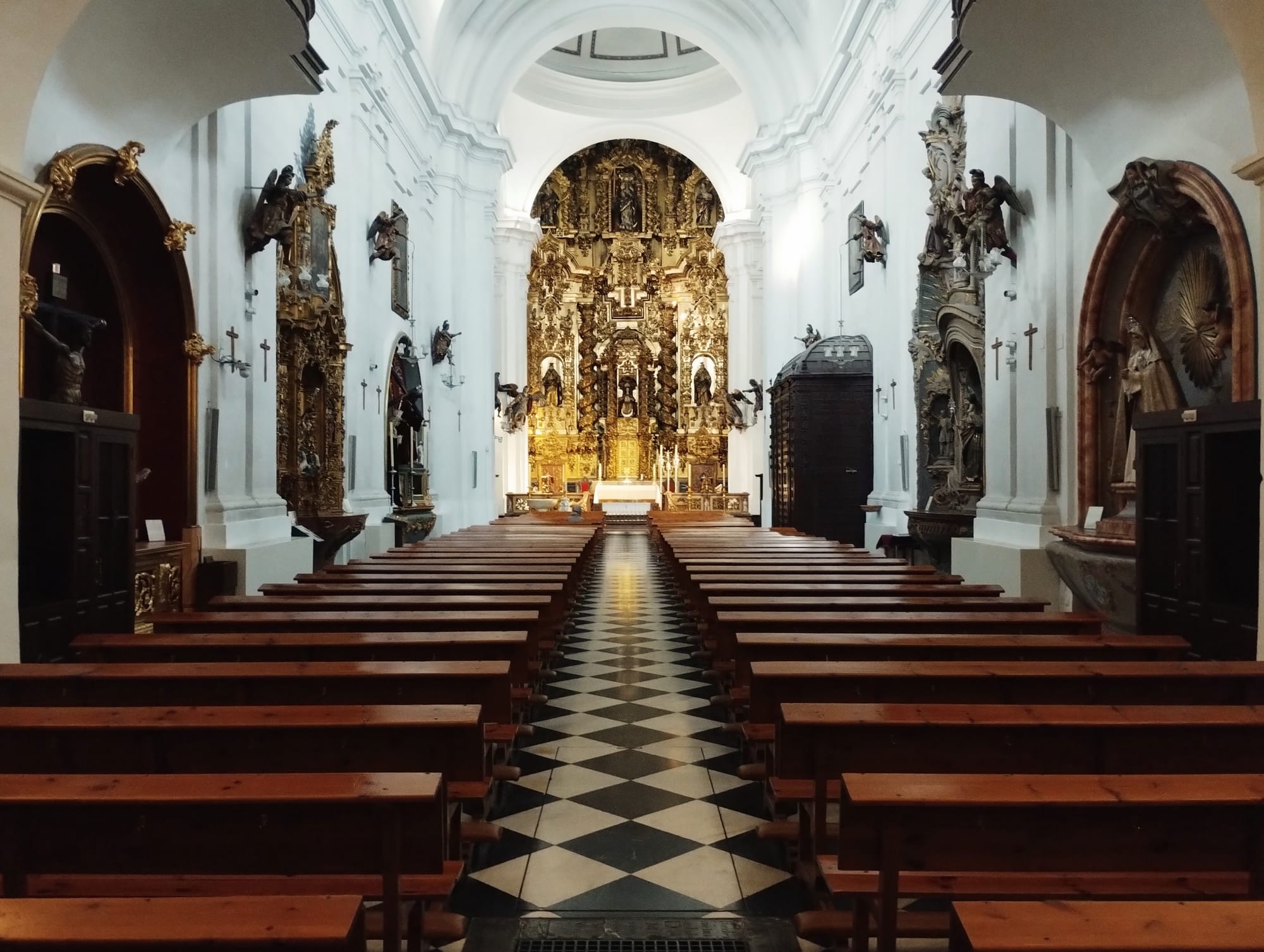
The church stands on the site of a former convent which was established shortly after Fernando III conquered the city in 1236. Built in the Baroque style, it forms part of the historic centre of Córdoba. The church as is it stands now was consecrated in 1705. I had a quick poke around inside looking at the sparkly tat then set off for an exploratory power-walk until I found myself inside the Mercado Victoria, a historic wrought iron building in the Jardines de la Victoria dating from the late 19th century which now plays host to an open food market where one can spend a happy time pottering and grazing.
There was plenty to tempt me, but as I was not really in the mood for food-driven amblings, I settled on some hummus and a pitta bread from a little Arabic food stall in the corner, which I washed down with a virtuous fruit juice and water, in an attempt to bolster the efforts of the Fervex.
I bought a most magnificent fridge adornment from a small market just off the Victoria Gardens for only two whole euros – much less than buying anything from anywhere near the Mezquita.
After another little curative snooze, I walked back down to the Mezquita-Catedral thinking I'd finally go in, but there were some quite long queues and as it was getting close to closing time, I decided I'd postpone until I'm no longer possessed of lurgy. Feeling that I should do some tourism, at least, I walked down to the Puerta del Puente via a route I didn't know existed, then walked along the river listening to unfamiliar birdsong.
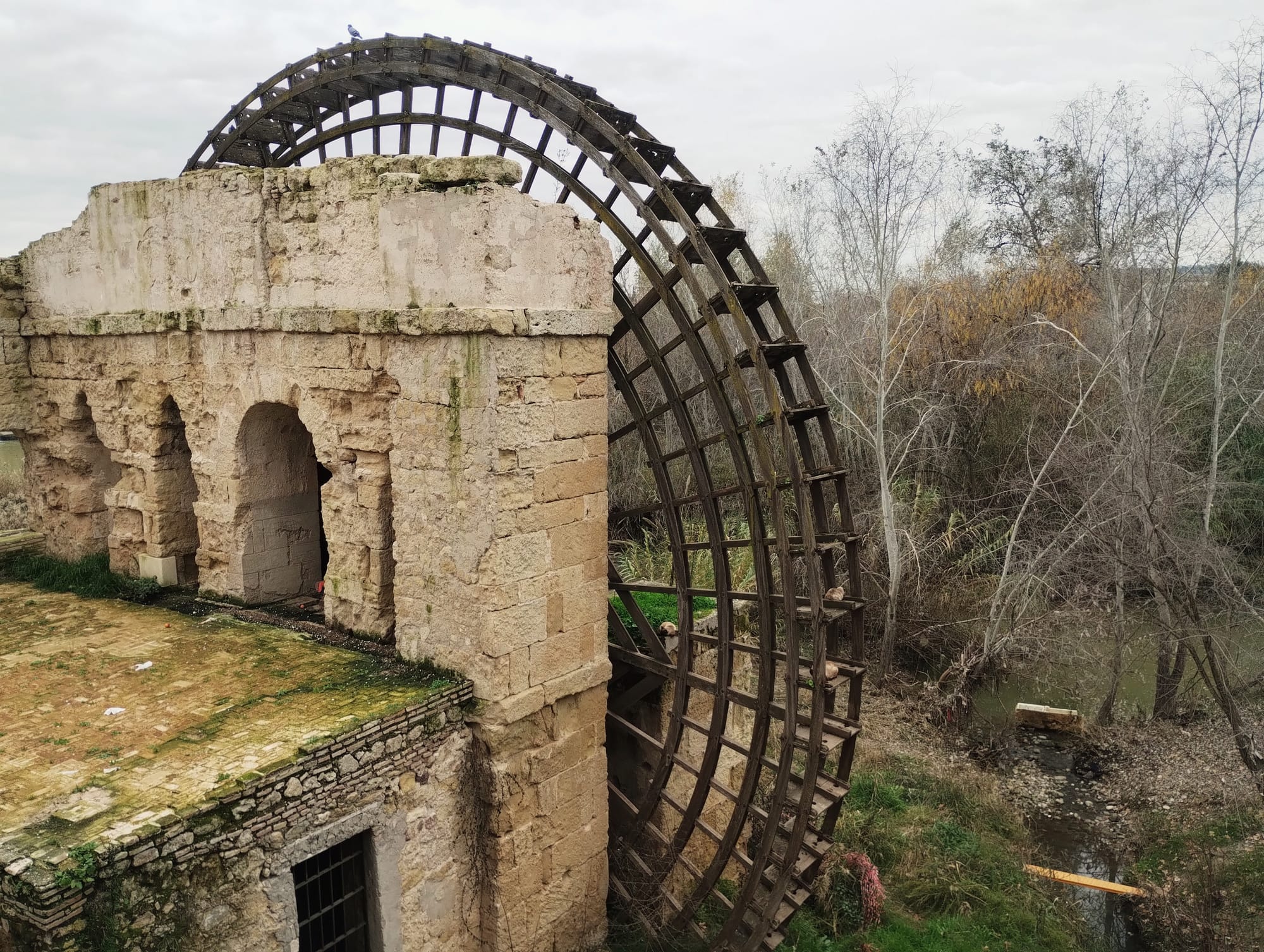
Yesterday, I'd spotted an old wooden water-wheel slightly further along the river, and that seemed a good place to kick off my contingency tourism.
The Molino de Albolafia is a medieval watermill on the River Guadalquivir that dates from Moorish times and is one of eleven that stretch along the river. It is suggested that the water wheels along the river date back as far as the ninth century, although there is only documented evidence of their existence from the tenth. Partly dismantled in 1492 on the orders of Queen Isabella – who found it too noisy and most certainly would not have approved of Mukbang videos on a train – and further adulterated in the 1960s, it is now governed by a Catiphate of rather plump Siamese kitties, who sleep on the paddles or on the walls of the old mill building, and never deign to acknowledge the presence of us lesser beings.
Along the river past the old palace gardens are the old Caliphal Baths, an Islamic bathhouse complex built in the tenth century – like probably everything else in Córdoba. In 1328, they were buried in order to make a small square, only to be accidentally unburied in 1691. They were then reburied and were not seen again until 1903, when they were once again accidentally unburied during some gardening work – and then buried again until 1961, when they were finally excavated and studied.
Now a cultural site, the remains form a museum which opened in 2006.
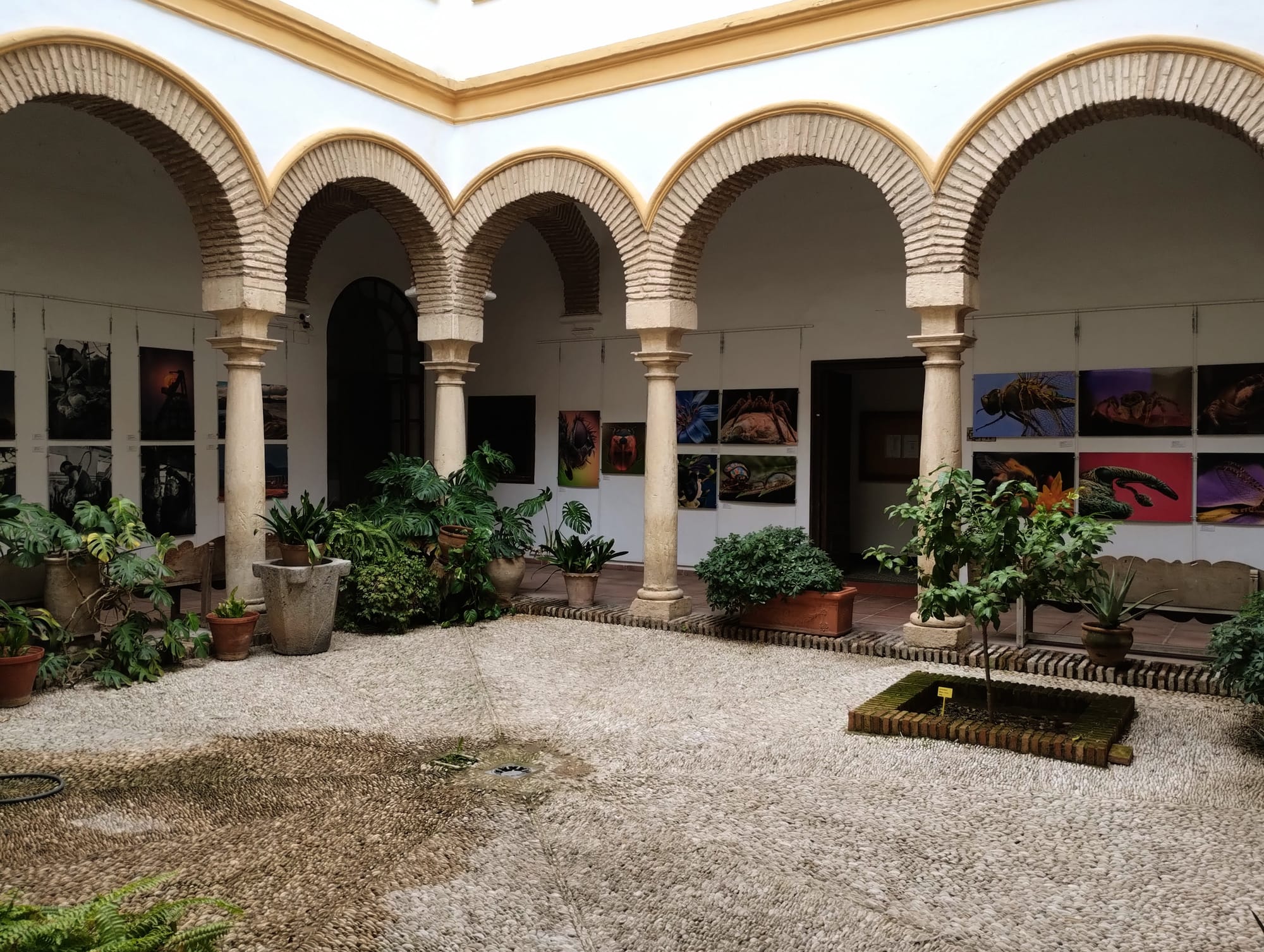
From there, I somehow found myself in the Faculty of Philosophy and Letters of the University of Córdoba. It's open to the public – I hope – and I had a fun walk round looking at the photographic exhibition in one of the cloisters. Originally, the building was destined to be a school linked to the Cathedral, but a plague in 1704 scuppered these plans and quickly highlighted a lack of healthcare in the city. This prompted the original plans to be abandoned and for the building to be converted into a hospital, the Hospital del Cardenal Salazar.
In the evening, I didn't fancy walking around in the cold or in the rain – wearing my new cap to keep my head dry which Parent gave to me at Christmas – so ended up back in the Mercado again. Thinking that the best way to cure a lurgy is with vitamins and vegetables, I attempted to cure myself with a nicely-chilled glass of white and a selection of olive and cheese tapas concoctions, some with chillis – for extra health. I washed this down with fruit juice.
For extra health.