Donostia: It's Saturday!
Pintxos, primates, and the world’s saddest fairground
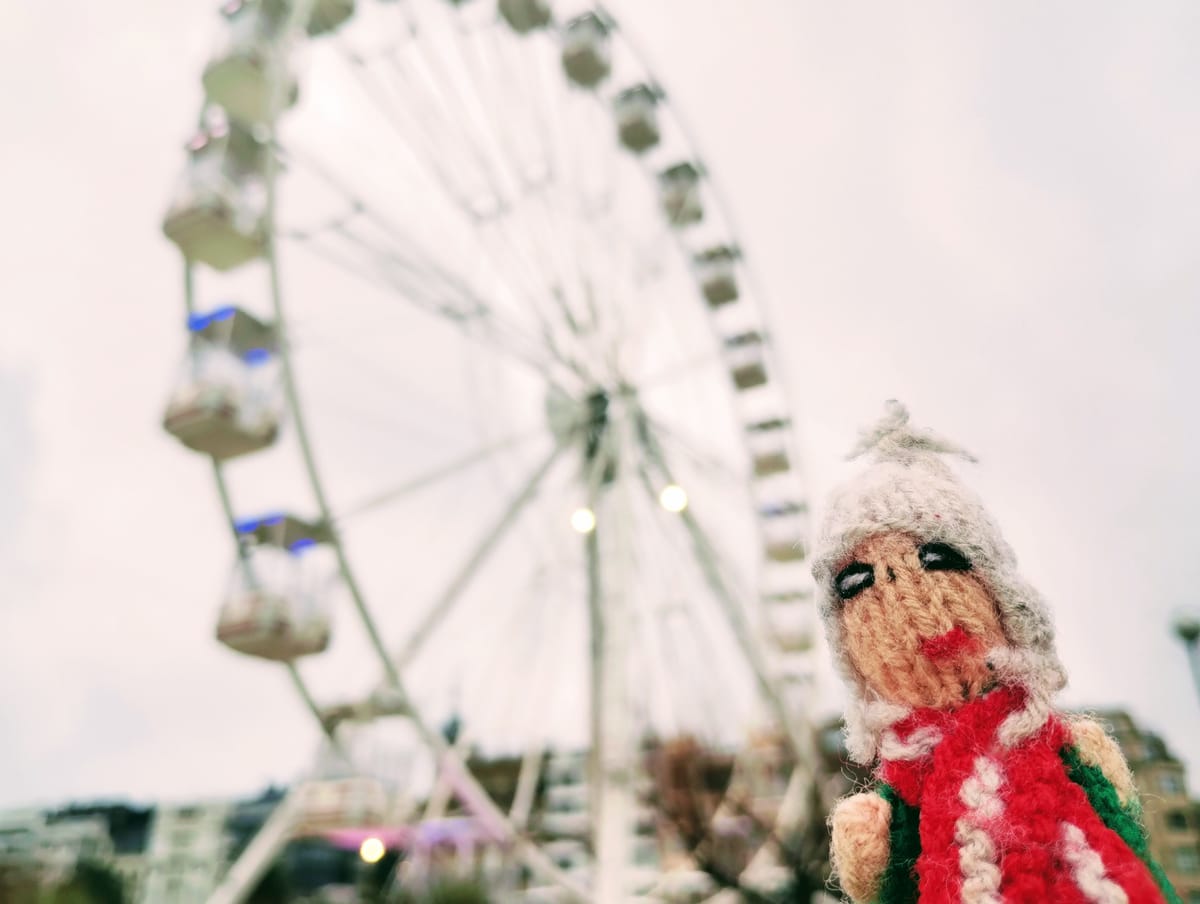
Let it be said: northern Spain in January is not – you may be shocked to learn – a tropical paradise. The mercury hovered stubbornly around ten degrees for most of the day, and there was a lot of enthusiastic rain.
I seized the opportunity to sleep in (very) late, having been quite tired after yesterday and mysteriously incapable of nodding off to sleep in my little sleepy casita pod. This was mostly for reasons unknown to me – perhaps trail end of lurgy – but my sleeping was not helped by a girl in a pod elsewhere who thought it acceptable to make phone calls on speaker at 1 a.m. and open the door to the terrace, inviting the arctic tundra indoors. I put an end to both of those behaviours with my best stern face and voice. Neither incident was repeated.
By the time I finally dragged myself out of bed, it was what some people might call the wrong side of midday – and still raining, although there had been some easing up so that it was no longer biblical. Once properly caffeinated (free coffee!), I decided I'd set off foraging for pintxos. Because pintxos. The girl on reception wholeheartedly agreed that there is nothing that can't be fixed by a nice drink and some pintxos, so with this sound local knowledge in mind, I ventured outdoors with my new travel cap on, for protection from the elements.
My mother will be pleased.
The best and closest place for early-afternoon pintxos is the Bar Amazonas on the Plaza de Bilbao, just a couple of minutes from the hostel. But first I thought I'd have a look at the seafront in case there was something happening. There was not, but it was... bracing.
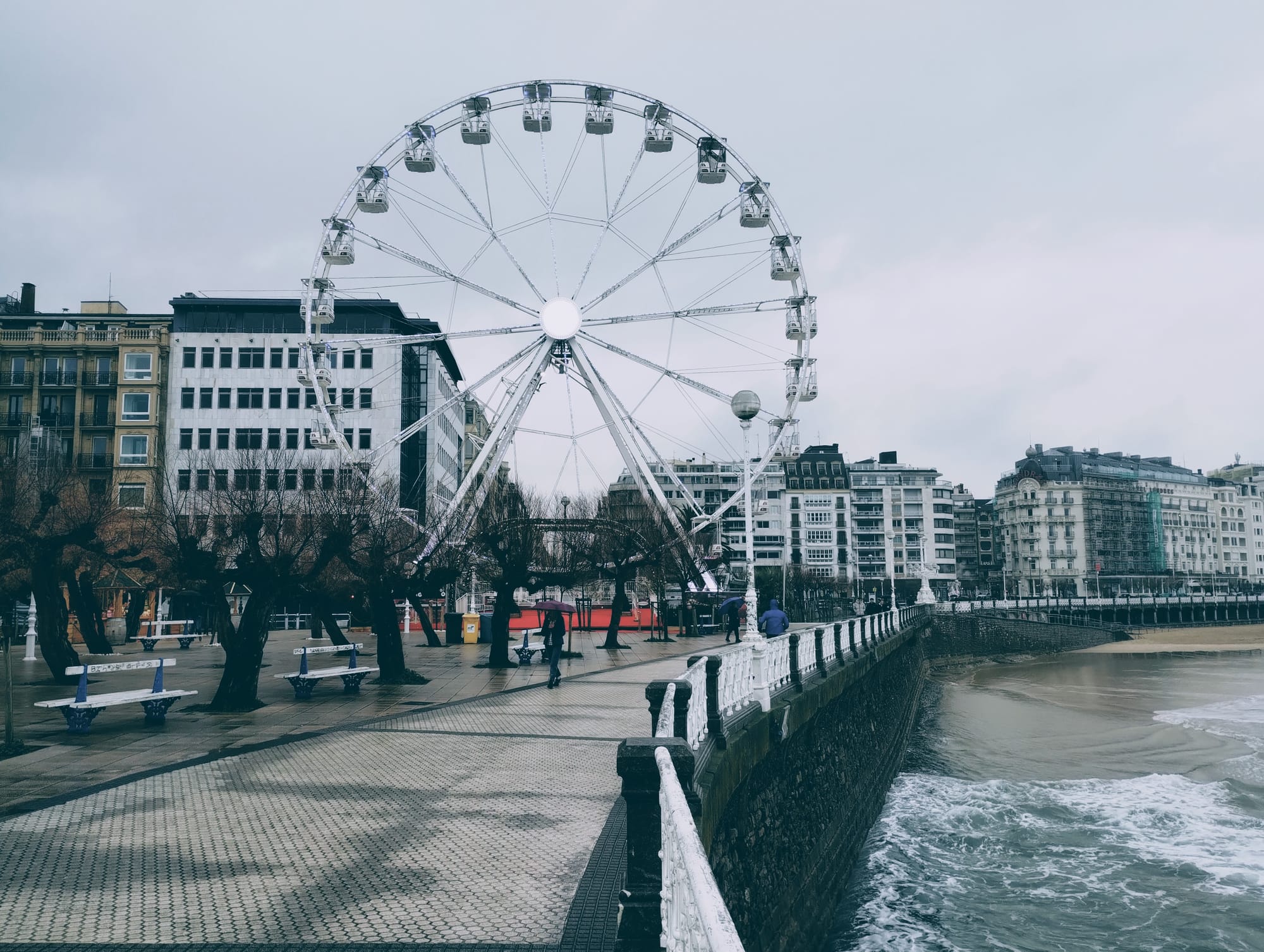
There were the traumatic remains of what looked like a post-apocalyptic Christmas market, and the world's saddest fairground – a carousel with a few damp children clinging to it for fear they might have to get off again, and a large Ferris wheel with no people on it, but with the potential of a British family on holiday. The matriarch radiated levels of bubbly that should not be legal in the presence of children in these conditions.
She clearly thought the Ferris wheel a good place to snatch some majestic views of the clouds and fog that were shrouding most things in most directions, and trotted out the lie we knew then and know now is a lie – Come on, children, it'll be fun! You're on holiday! – on a gaggle of unconvinced children of varying sizes who trudged dutifully through the puddles behind her, looking at the ground and wondering why their ice-creams still hadn't melted.
My mind was cast back to family outings to Borth, a place in God's Own Country spared by the Welsh from the sinfulness of fun. I learned many years ago that the sea front in this condition is not for me, and so I left it to the surfers who were having tremendous fun on a very angry-looking series of waves.
I reverted to my much more sensible original plan: pintxos. At the Bar Amazonas, happy, smiling Spanish children were having a much more enjoyable Saturday afternoon in the warm, and running around the bar. With chips. I had a ración de tortilla, some fishy toast things, and a nice cold half of Mahou to wash it all down.
Not to be thwarted in my quest for culture, it was time to tackle what I thought was going to be the Tobacco Museum, the Tabakalera. It was, in fact, not an actual tobacco museum at all, but instead a contemporary culture centre open to all for free, in the old tobacco factory just next to railway station. Tobacco was one of Saint Sebastián's main employers in the ninety years the factory was open, until it closed in 2003. The following year, the city council purchased the building and transformed it into the International Centre for Contemporary Culture of San Sebastián.
Inside, there are exhibition halls, a multi-purpose plaza, a multi-purpose hall, a cinema, a creation library, media labs, spaces for art creation, a cafeteria, and a posh hotel. On the ground floor there is a massive open space dominated by sparkly art by an Argentinian artist suspended from the ceiling (the art, not the artist), which people below sit and sketch. Kuboa is a mobile of 2,660 pieces of polished stainless steel, which twist, turn, and sparkle and make occasional jingly noises.
On the first floor, two large halls had exhibitions of art. Or so the signs said.
The first was an exhibition of the work of Marlene McCarty, whose suggestion that her art resembles an encounter with female sexuality and that “You have to get in there and (metaphorically) dig around” left me checking under my nails. Her drawings of primates depict relationships with ladies not ashamed of, well, much, and which "make us uncomfortable."
Well done her; she succeeded in that.
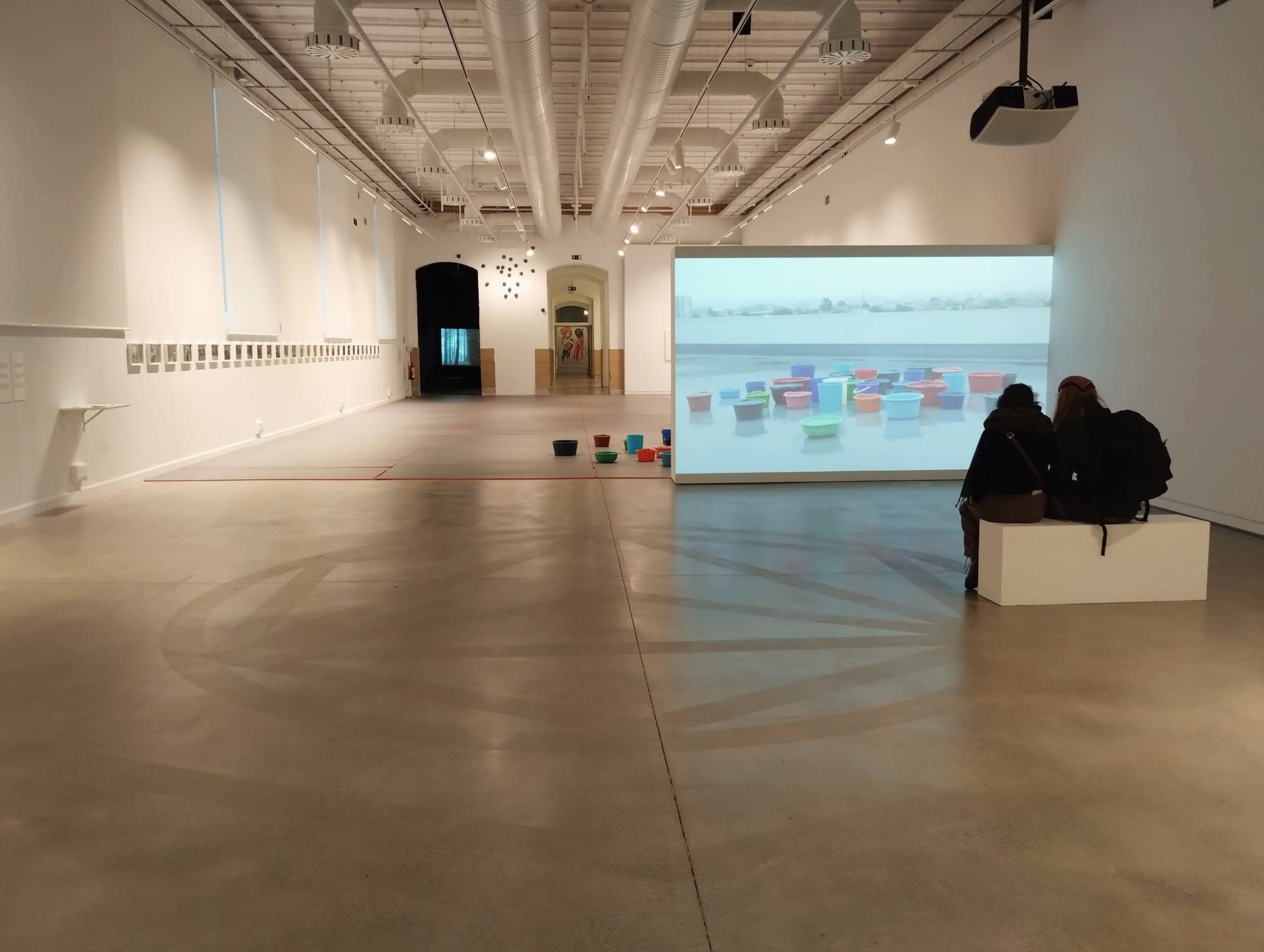
The second, a big white room with a temporary wooden floor disguised as a trip-hazard, was where someone called Maider López had forgotten to tidy up a selection of buckets. Some people were studying and discussing the buckets very closely, as if they had never seen buckets before. Behind a small wall, two visitors were studiously watching a film of the buckets being rained in, as if they themselves lacked the mental fortitude to imagine what buckets might look like with water in.
Growing up in a centuries-old farmhouse in rural Herefordshire – which, I think it is safe to say, had one or two leaks – I'd never have believed that our downstairs toilet, back passage, bathroom, landing, and some bedrooms were live art installations. Who'd have known?
It is possible I did not appreciate this art as much as other people, but it was worth every penny of the entrance fee.
On the second floor, there was a photographic exhibition much more to my liking, which explored Gipuzkoa – the province of the Basque country in which Donostia is found – through the lenses of various photographers. On the third floor is an enormous library, where people rented films to watch on televisions with headphones. In big comfy chairs, people sat reading books, while others enjoyed some retro video games, or just sat out of the cold, charging their phones. I wondered how the other children were enjoying their ice creams.
The fourth floor is closed for renovation work, and the top floor has a terrace that provides what must normally be glorious views of San Sebastián.
Back in the hostel, I met and gatecrashed the conversation of some of my fellow sleepers: Alexi is a smiley Mexican Erasmus student whose flawless English has a lovely lilt; Chris is from Bulgaria, but studying in the Netherlands; and Javier, a pharmacist, who was staying overnight as he was working in the morning and didn't fancy the Euskotren. I felt old.
Javier and I decided we needed food at about the same time, so set off looking for evening pintxos. Our culinary tour took us first to Ciaboga, for the garlic potatoes, onwards to Txepetxa for anything and everything anchovy (and a glass of white wine for health), then Ganbara, for an exceptionally expensive mushroom dish akin to steak tartare, but with mushrooms. We agreed that at 23€, it wasn't worth having again.
And then back at the hostel and after some more chatting about a variety of profound subjects in languages that weren't their first, I checked my train times for the morning and made my way to bed.
Madam had left the door to the terrace ajar again – closed that for her – but at least she wasn't making phone calls.