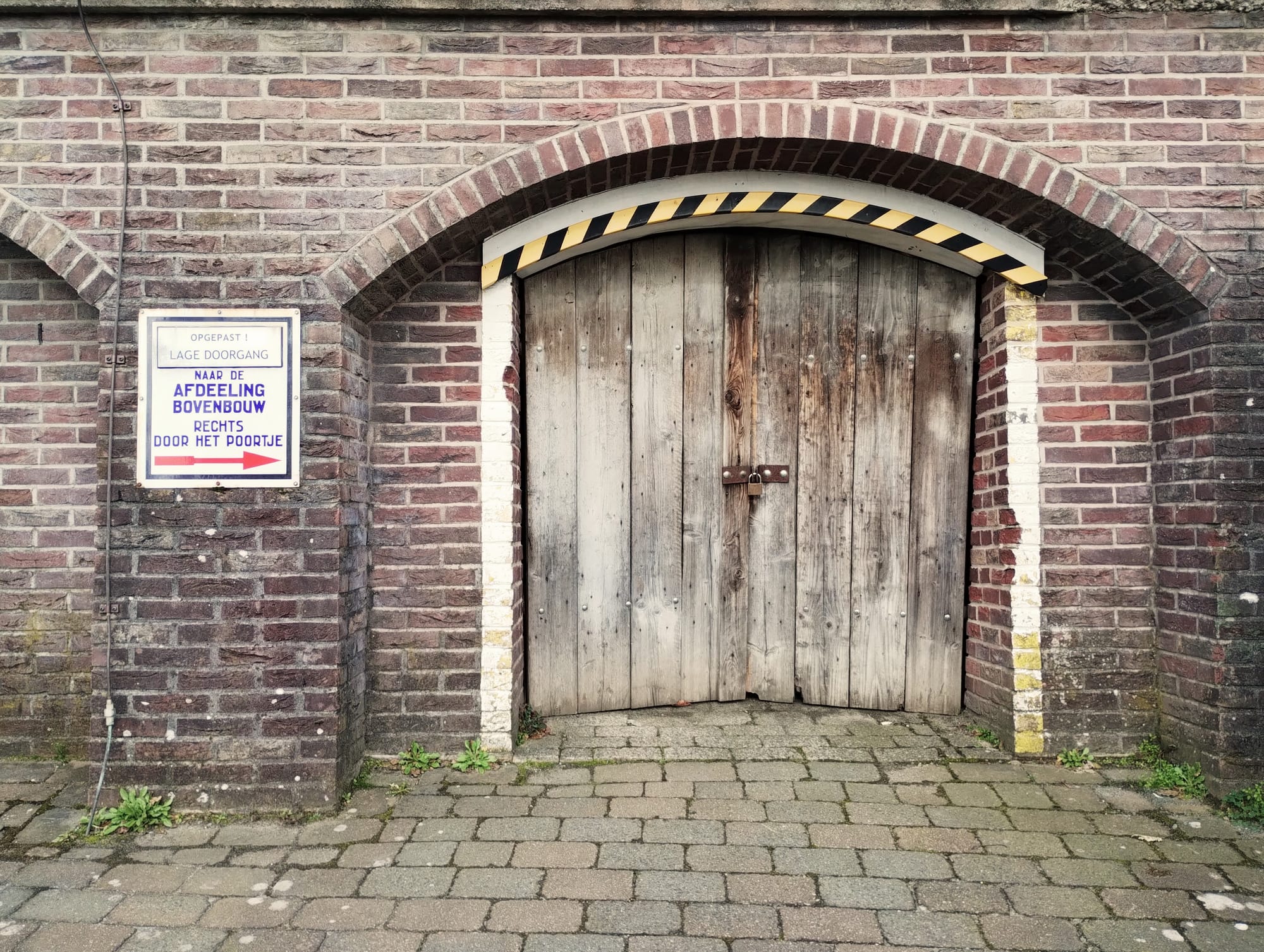
Twingomania, day three: Utrecht
Tsjoeketsjoek! Spoorwegmuseum!
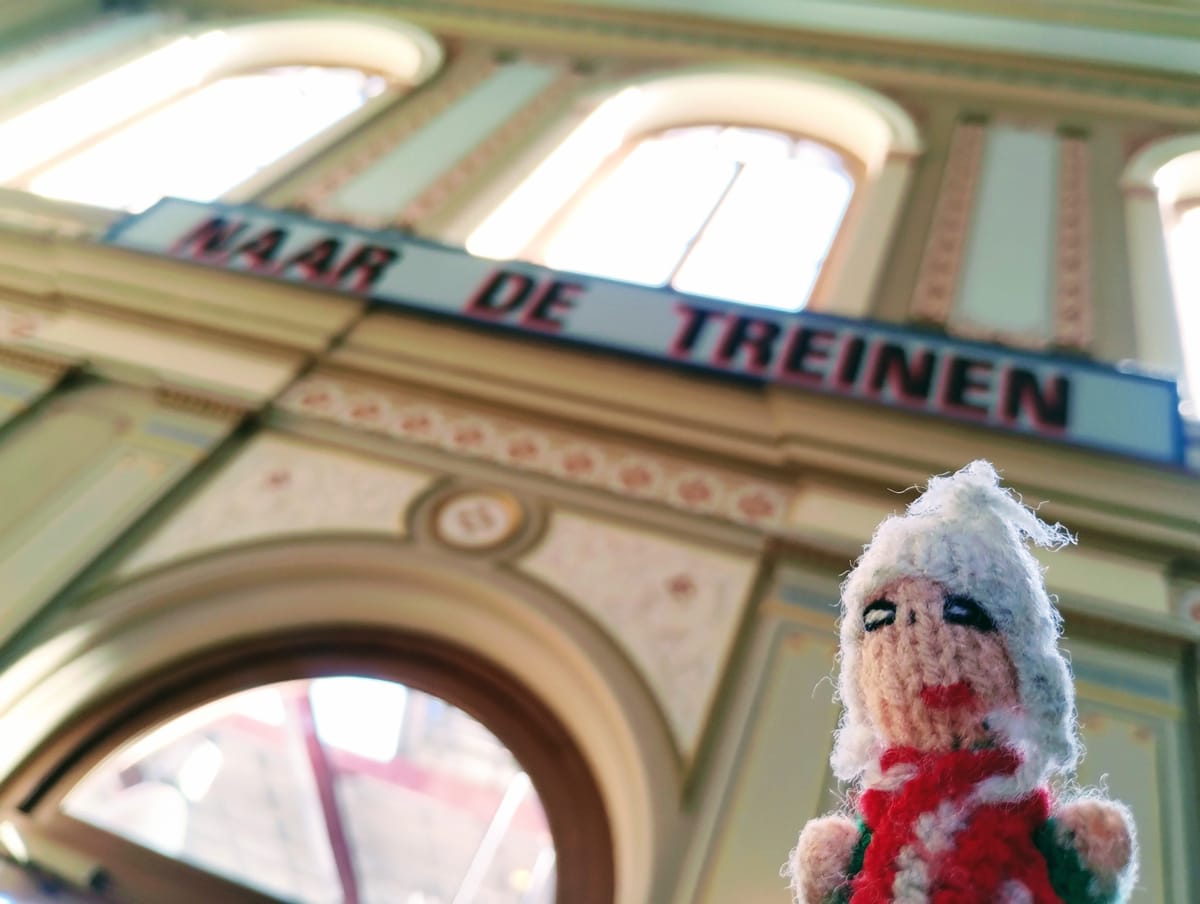
Today was lazy but incredibly sunny and so, on the basis of a random suggestion, it was decided we'd go to Utrecht's railway museum as a way of not sitting inside all day.
Ideally, we'd have taken the number one bus to Central Station and then hopped on a special shuttle train into the museum itself at the old Utrecht Maliebaan station. Our itinerary did not involve a train from Utrecht Central because it was nice and sunny, and so instead we took a couple of buses and had a nice walk through the park, and a bonus convent.
Utrecht Maliebaan was built by the forerunner to the current Dutch national railways, the Hollandsche IJzeren Spoorweg-Maatschappij. From its opening in 1874, the number of passengers using the station was low due to its inconvenient placement relative to the city centre, and so it was renovated in 1887 to accommodate freight transport which made up most of its traffic until Nederlandse Spoorwegen (so much easier) was formed in 1938. That was when Maliebaan station was considered surplus to requirements, and consequently closed on 15 October 1939.
During World War II, the station was reopened specifically to deport Utrecht's Jews to Camp Westerbork, and from there to the extermination and concentration camps. There is a memorial in front of the former station for the 1,239 victims of deportations from the city of Utrecht.
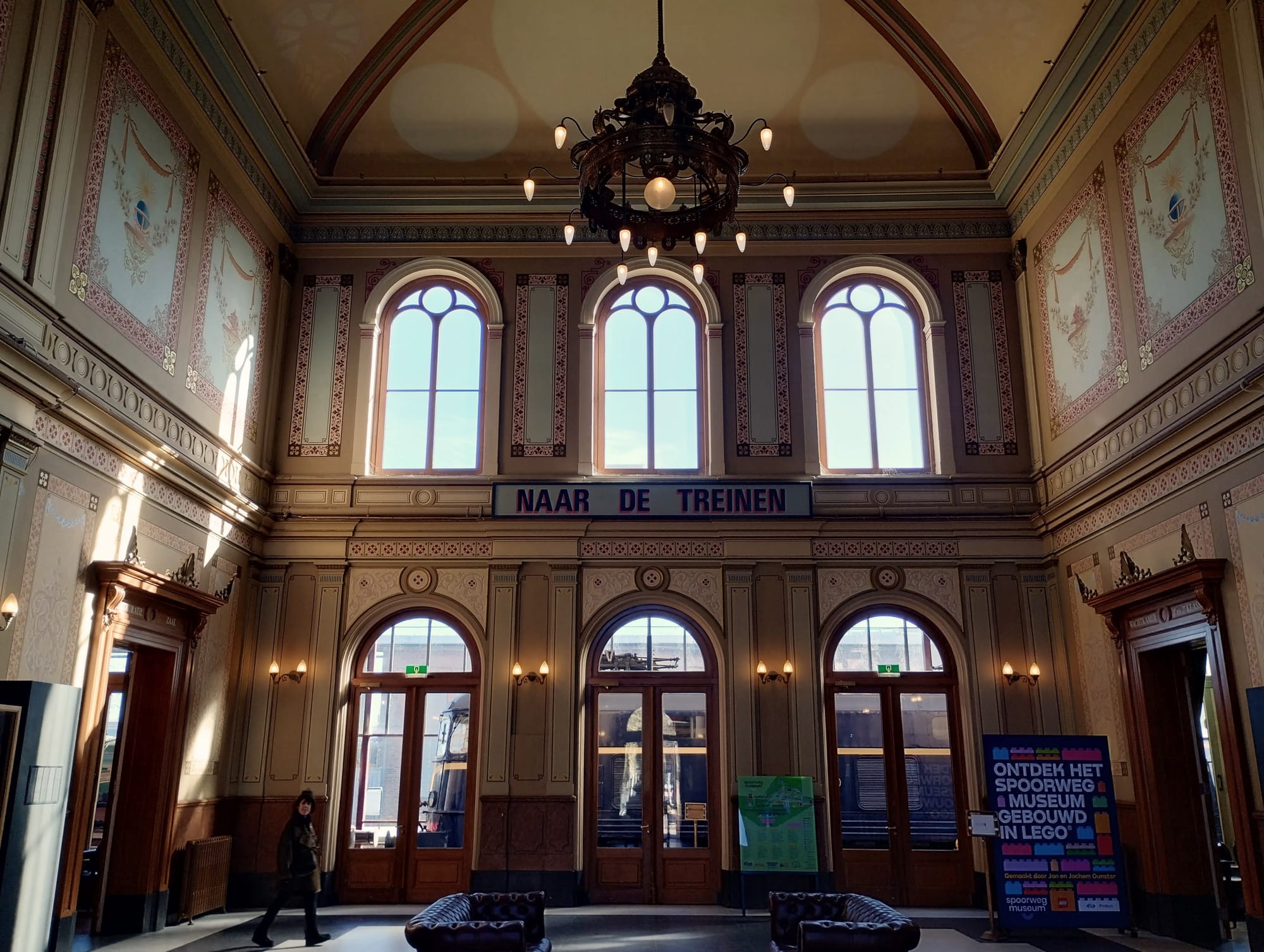
After a few years of itinerant museumry in Utrecht and Amsterdam, the museum set down roots in the restored station building in 1954, and has been there ever since. On arrival, some bemused staff members will eye your finger puppet suspiciously before you walk into a splendid painted foyer adorned with chandeliers, as well as restored waiting rooms for all three classes, a luxurious dining room, and toilet facilities decorated "in 19th-century style".
A lot of the museum can be accessed without having to pay, as it's only once you get past the old platforms and have a wander through the royal "saloon coaches" from the 1950s and 1990s – a kitchen with an actual stove on a train – that you have to show your ticket. Inside, much as with the rail museum in York, there's plenty to keep children up to the age of 52 and beyond amused for a number of hours.
Our first port of call was the gift shop, where I found a particularly traumatic holographic fridge magnet in which the train moves rapidly towards you, allowing you to relive the final few moments of your life without actually having to jump in front of a speeding train. I also collected a postcard – might send, might keep – and investigated other things I might like to purchase on a further visit, should the need arise. An NS meal tray was a tempting purchase but it was stupidly expensive. I nearly bought a notebook.
Behind the gift shop was the food court, and as it was a lovely sunny day, Vriend and I sat and had our lunch in the sun before exploring proper. While this is something of a sweeping generalisation, the Dutch appear to do "things to do with children" really rather well, and there are plenty of outdoor play areas and places for grown-ups to sit as well. As we basked in the sunshine, children were enjoying sandpits and bits of old train turned into playthings while their parents shouted reassuring encouragement from behind a coffee.
Exhibits of the museum include a wooden restaurant car from 1911 made for international service, including the Orient Express, as well as a couple of old mobile sorting offices, a working turntable, a signal box, and a permanent exhibition called "Loaded Trains", which details the forced transport of Jews, Roma and Sinti to extermination camps during World War II.
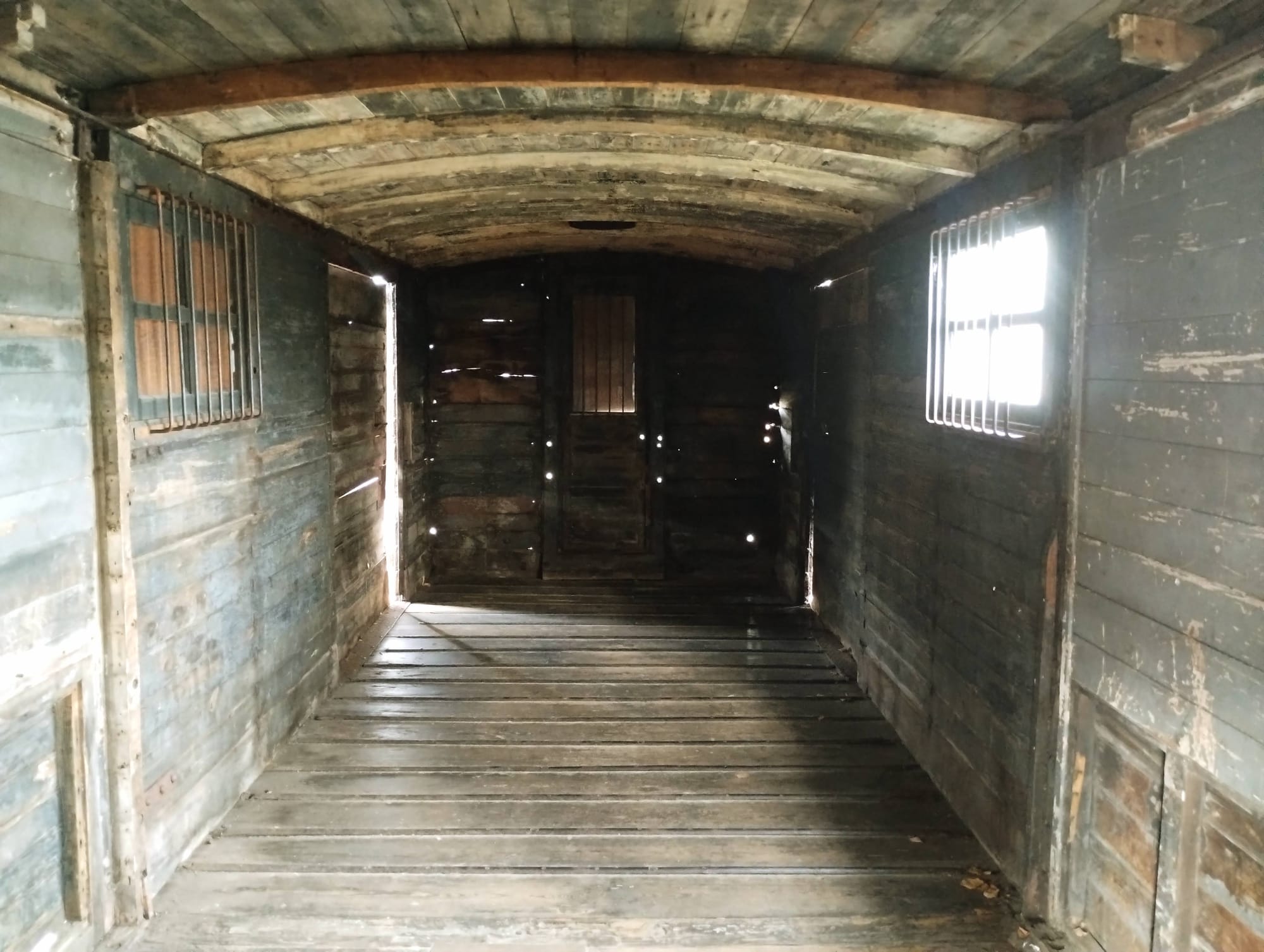
Baggage car NS 4088 was built in 1914 but was missing for nearly 60 years after being moved to Eastern Europe by the Nazis during World War II. It remained there until 2002, when it was found languishing in a remote train yard near Bucharest. These empty featureless carriages – along with freight and third-class carriages – were used for deportation. Up to a hundred people were transported as baggage in each car, the doors of which were sealed shut once loaded, to ensure nobody could escape. Only those "lucky" enough to be standing near a window or a gap between planks had access to fresh air.
There is an interactive exhibition next to the carriage, which is also available online.
Also of note – and probably really for children – is the Trial By Fire immersive train ride-cum-simulator experience which was in all honesty probably worth the entry fee alone. There's a bit of a wait and an introductory video, but once you're on the ride itself it's rather good fun. There's also a big room full of Lego – where children of all sizes relax under the watchful gaze of the gigantic six-metre tall "blue board" used to provide travellers at Utrecht Central Station with much-needed information – and another ride which we decided not to queue for.
My fun takeaway fact from the entire visit: in the days of third-class travel, people would often opt to travel in third because the lack of upholstery led to fewer lice infestations.
So that's nice.
Again, we didn't take the shuttle from the museum to the Utrecht Central, but walked back to Oudegracht for a tasty sandwich from a Surinamese eatery, before (accidentally) following the Letters of Utrecht and taking in some street art. The Letters of Utrecht is an endless poem in the stones of a street which we almost literally stumbled upon, quite by chance. Every Saturday at 13:00, the next letter in the poem is revealed in the next cobblestone. It takes about three years to publish an average sentence.
After beer, we went to the cinema again, because it was there.