Twingomania, day two: Utrecht
In which I find God in a library and the King’s Bollocks in a bar.
My full day of Utrecht exploration started with a trip to the supermarket, followed by a late breakfast in a Moroccan restaurant, before a ride on the number 1 bus to the Bibliotheek on Neude Square.
The weather was murky, but otherwise obliging.
If Antwerp Central is a cathedral to the railway, then the main library in Utrecht – housed in what was once the post office and telephone exchange – is a cathedral to books. In the fifteenth century the site hosted a convent, later "acquired" by the municipality of Utrecht after the Protestant Reformation. From sometime after 1647, the building became home to the Royal Dutch National Mint.
The mint was eventually demolished, and construction of a new post office began in 1919, to be completed in 1924. In 2008, it was announced that all post offices in the Netherlands would be closed, and on 28th October 2011, Utrecht’s main post office on Neude Square was the last Dutch post office to shut its doors.
Starting in 2016, the building was converted into a multipurpose cultural centre and has been the headquarters of the Utrecht public library since 2020.
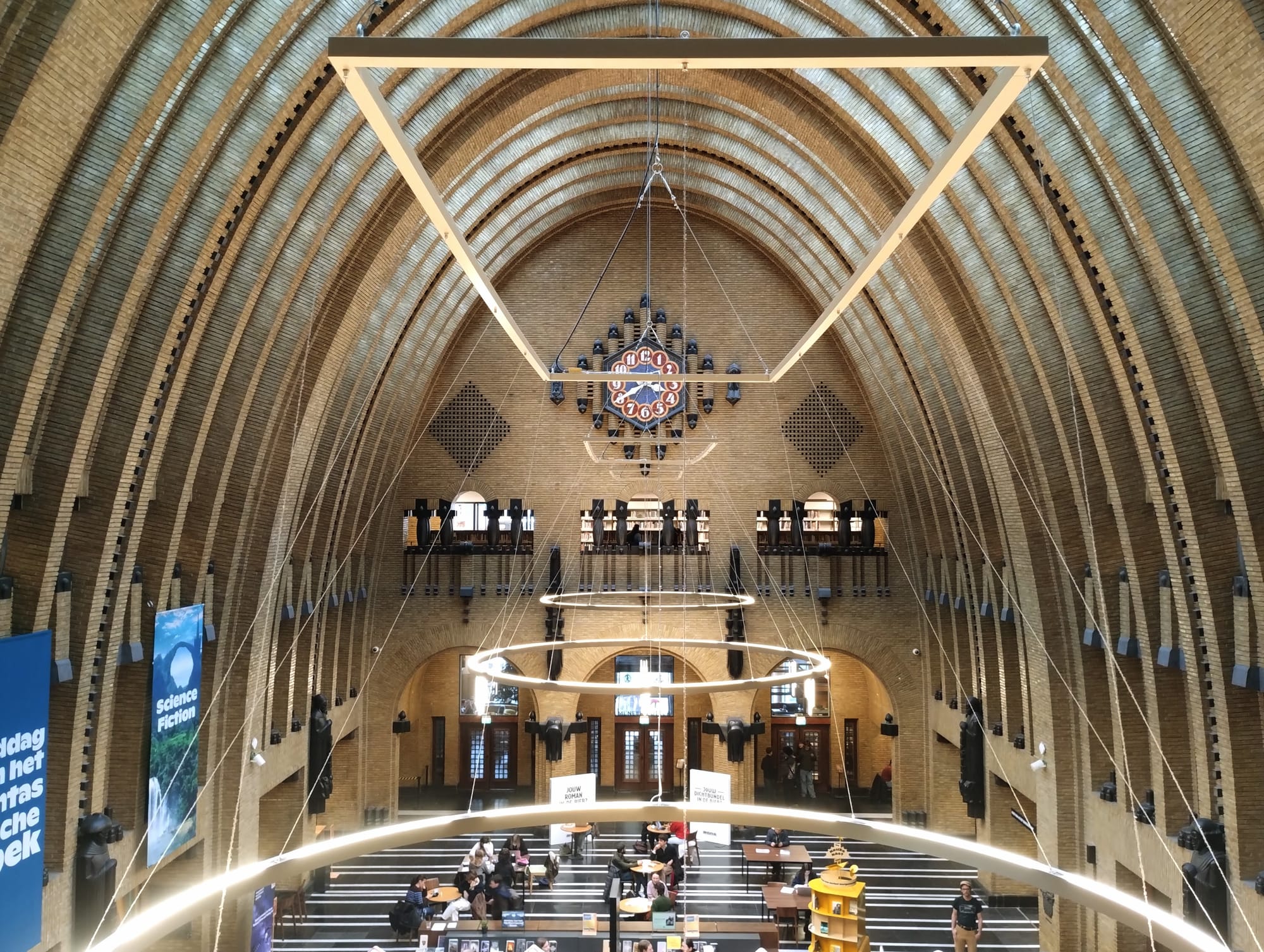
The main hall is an impressively vast space, where dealers peddle their papery wares from book-laden stalls beneath cathedral-like parabolic arches. From these hang three enormous light rings, like celestial bodies that complement the natural light which streams through the glass above them. At the east end, in place of an effigy, an ornamental porcelain clock produced by De Porceleyne Fles has marked the time – to anyone who cares to look up – for over a century.
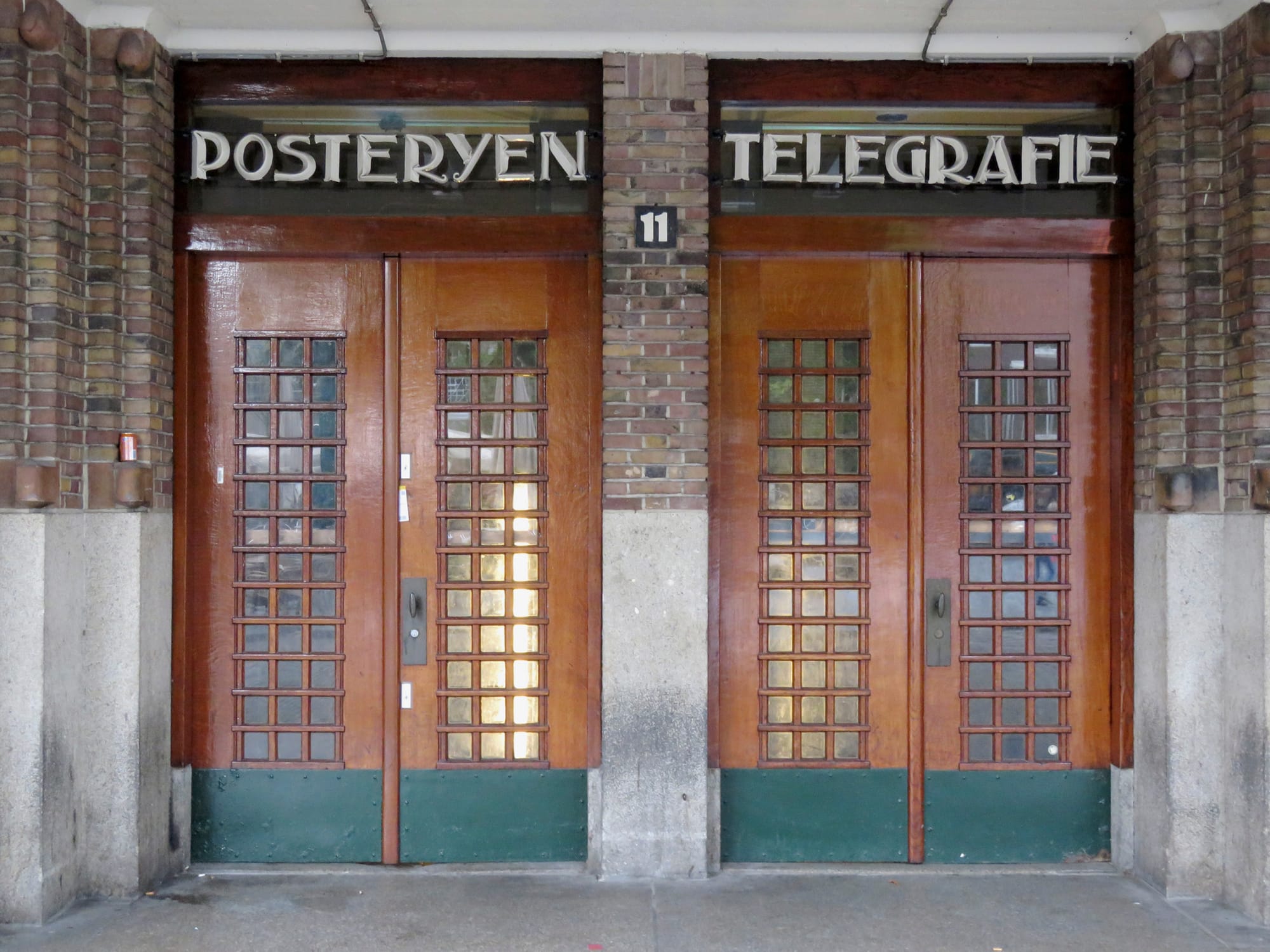
This is the post office, where Utrechtenaars would come to send their news around the world via the wonders of the post or telegram. Upstairs, at either end of the building, there are galleries which previously housed various bits of telephone exchange, but which now constitute the library proper, with places to sit and rooms that can be reserved for meetings. From the galleries at the east and west ends it is possible to look down into the hall and watch people going about their business.
After much ooh-ing and aah-ing, Vriend dragged me from the hallowed halls of the Boekencathedraal into the moist embrace of Utrecht’s canals for more cultural discovery. A lot (most) of this cultural exploration was degustative, of course, but we spent time exploring the canals, unique in both Holland and the world with their werfkelders – water-level storage spaces, or wharf cellars, built in the Middle Ages.
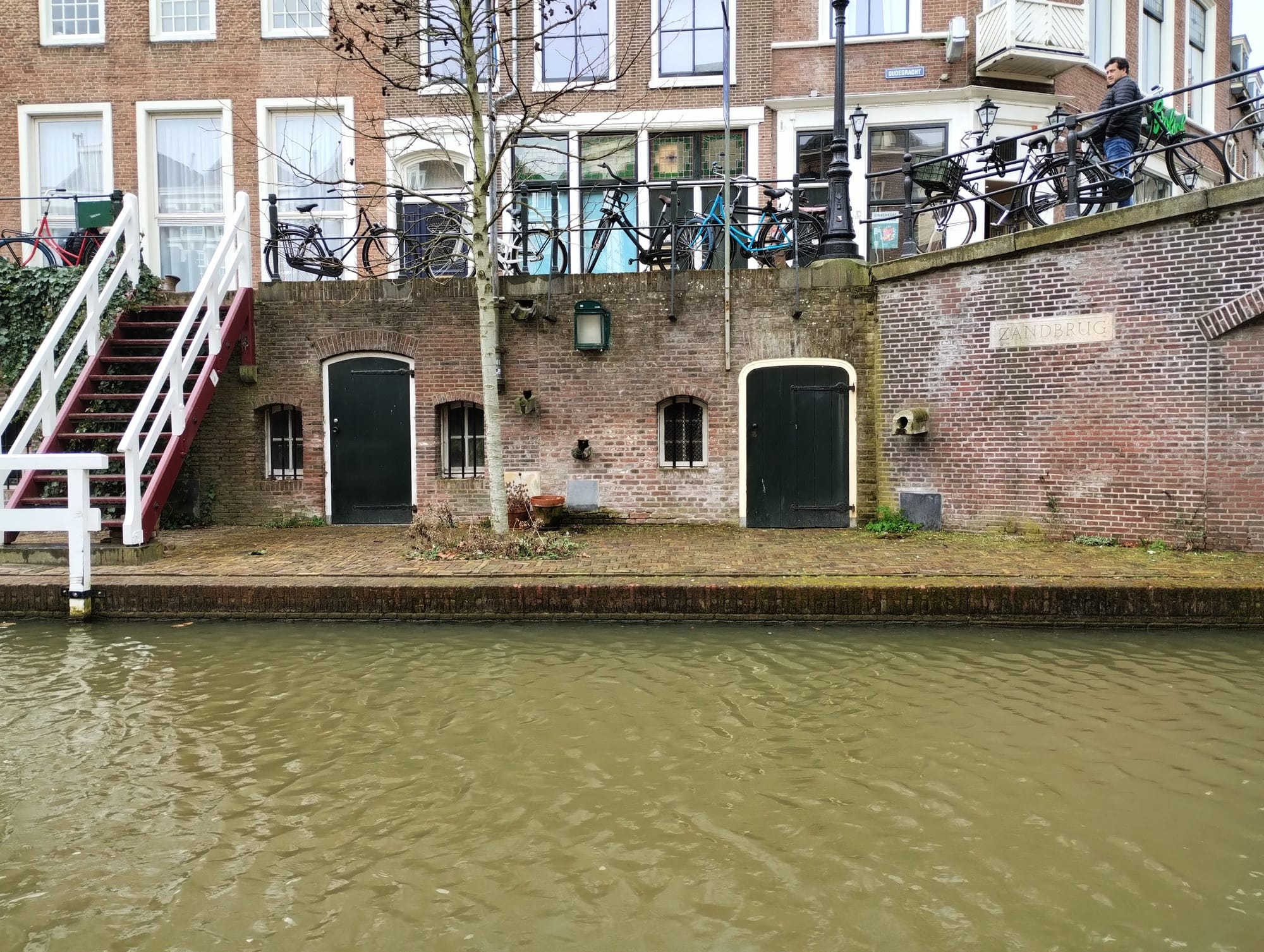
These originally allowed merchants to transfer goods and commodities directly from boats into storage in cellars beneath their homes. Today, the cavernous structures have variously been converted into cafes, restaurants, shops, and apartments. A serendipitous side effect of the werfkelders is that the roads that run above them have very strict weight restrictions, meaning that the centre of Utrecht around the canals is pleasantly free of traffic.
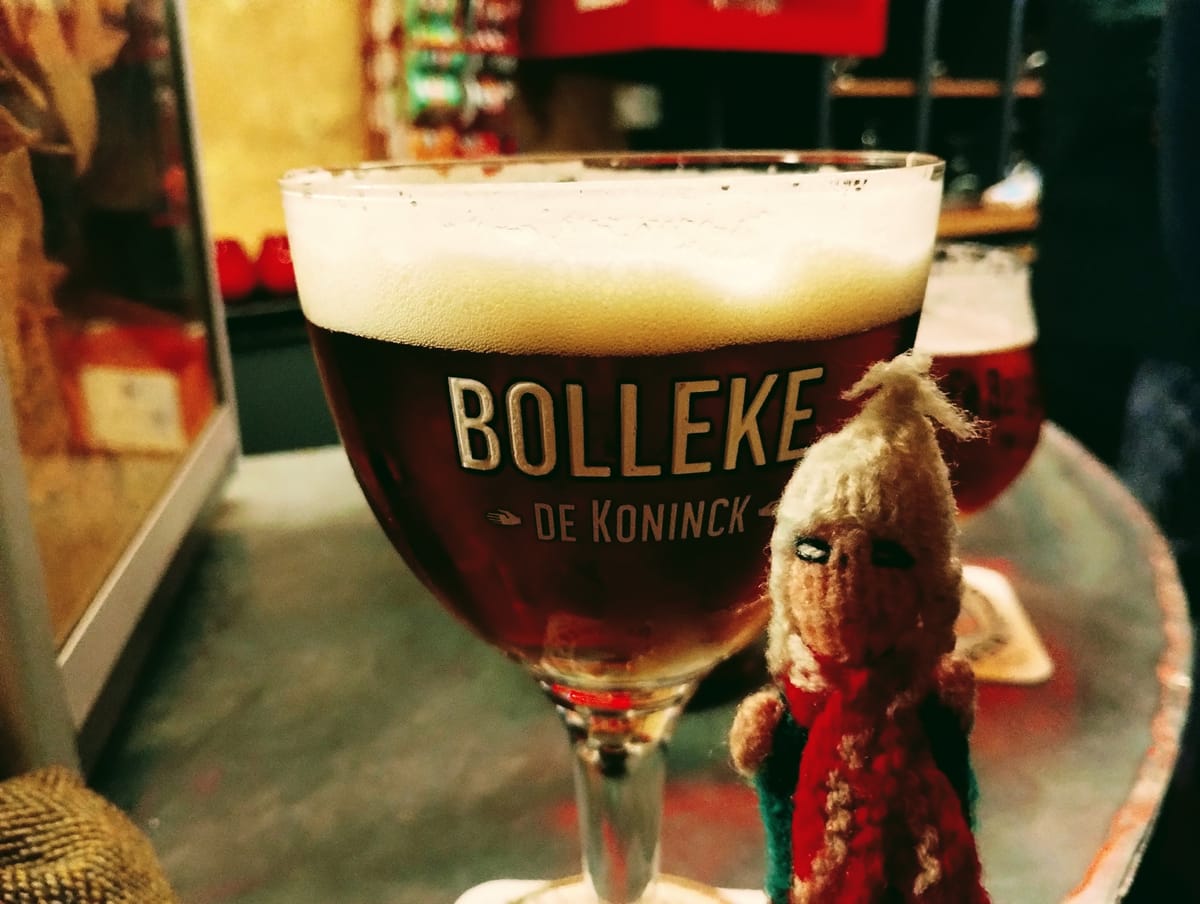
And then it was beer o'clock. The first beer was in the Kafé België on Oudegracht, where I very much enjoyed my first taste of Bolleke de Koninck – the King's Bollocks. I could have had a Pilsner Urquell, but it didn't feel right, somehow. Afterwards, we had a wander to the cinema for film selection and then killed time with a quick game or two of Backgammon in the Stichtse Taveerne while waiting for it to start.
I have procured a most spectacular fridge magnet to commemorate my day's successful tourism.